

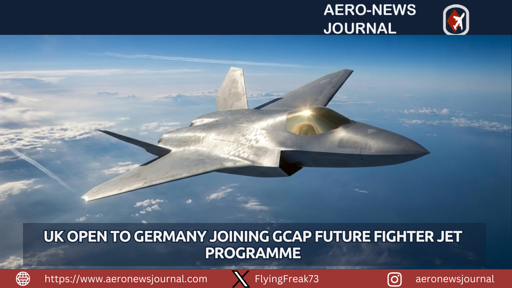
This stance comes amid growing uncertainties surrounding the rival Future Combat Air System (FCAS), a Franco-German-Spanish project plagued by industrial disputes and delays.
…
The potential inclusion of Germany in GCAP highlights shifting dynamics in European defence aviation. Persistent tensions in FCAS, centred on workshare disagreements between Dassault Aviation and Airbus, have raised questions about its viability, prompting speculation that Berlin may seek alternatives to secure its next-generation fighter jet requirements. Italian Defence Minister Guido Crosetto recently noted that conditions are being established for new countries to join GCAP, explicitly mentioning Germany as a prospective partner alongside others like Australia. This openness aligns with GCAP’s equal partnership model, which has already fostered rapid progress, including the establishment of a joint venture headquarters in the UK and plans for a demonstrator flight by 2027. Incorporating Germany could enhance the programme’s industrial base, potentially accelerating development of the Tempest-derived aircraft and broadening its export potential.
…
Not that surprised to be honest. It seems every joint venture with France leads into pure chaos.
With Dassault not necessarily France. FREMM, Storm Shadow/SCALP, FREMM, Aster and a bunch more sucessful projects come to mind.
I refuse to believe that this was not government backed. Any of it.
Didn‘t something similar happen back in the day during the Development of the Eurofighter? 🤔
Exactly the same. And again with the main battle tank. The French build good stuff, but oh boy do they hate sticking to contracts.