Are these really the people that should be required to work so much? Isn’t their job about handling life and death daily? Wouldn’t we want exactly these people to come fully rested to work every single day and be fully staffed?
I don’t know if there are jobs with similar stakes that are so carelessly staffed and disgustingly paid.
‘How does capitalism keep the unemployed on hand?’ you ask.
Simply by compelling you to work long hours and as hard as possible, so as to produce the greatest amount. All the modern schemes of ‘efficiency’, the Taylor and other systems of ‘economy’ and ‘rationalization’ serve only to squeeze greater profits out of the worker. It is economy in the interest of the employer only. But as concerns you, the worker, this ‘economy’ spells the greatest expenditure of your effort and energy, a fatal waste of your vitality.
It pays the employer to use up and exploit your strength and ability at the highest tension. True, it ruins your health and breaks down your nervous system, makes you a prey to illness and disease (there are even special proletarian diseases), cripples you and brings you to an early grave — but what does your boss care? Are there not thousands of unemployed waiting for your job and ready to take it the moment you are disabled or dead?
That is why it is to the profit of the capitalist to keep an army of unemployed ready at hand. It is part and parcel of the wage system, a necessary and inevitable characteristic of it.
It is in the interest of the people that there should be no unemployed, that all should have an opportunity to work and earn their living; that all should help, each according to his ability and strength, to increase the wealth of the country, so that each should be able to have a greater share of it.
But capitalism is not interested in the welfare of the people. Capitalism, as I have shown before, is interested only in profits. By employing less people and working them long hours larger profits can be made than by giving work to more people at shorter hours. That is why it is to the interest of your employer, for instance, to have 100 people work 10 hours daily rather than to employ 200 at 5 hours. He would need more room for 200 than for 100 persons — a larger factory, more tools and machinery, and so on. That is, he would require a greater investment of capital. The employment of a larger force at less hours would bring less profits, and that is why your boss will not run his factory or shop on such a plan. Which means that a system of profit-making is not compatible with considerations of humanity and the well-being of the workers. On the contrary, the harder and more ‘efficiently’ you work and the longer hours you stay at it, the better for your employer and the greater his profits.
You can therefore see that capitalism is not interested in employing all those who want and are able to work. On the contrary: a minimum of ‘hands’ and a maximum of effort is the principle and the profit of the capitalist system. This is the whole secret of all ‘rationalization’ schemes. And that is why you will find thousands of people in every capitalist country willing and anxious to work, yet unable to get employment. This army of unemployed is a constant threat to your standard of living. They are ready to take your place at lower pay, because necessity compels them to it. That is, of course, very advantageous to the boss: it is a whip in his hands constantly held over you, so you will slave hard for him and ‘behave’ yourself.
from Now and After by Alexander Berkman, Chapter 5: Unemployment. Available to read for free here.
Even in countries where healthcare is socialised, they are run “efficiently” like a capitalist business by administrators who care not for healthcare but for finances, “balancing the books”, and bean counting.
The greatest fear of capitalist administrators is that there might be a slow night in the hospital and a few employees have some down time to take a breath where no “production” is taking place. The shareholders would not be amused. That’s why they staff hospitals with the bare minimum, paying them as little as possible and using them as much as possible.
You know what’s funny? I actually think the situation is a lot better than you’re making it out to be.
You’re not entirely wrong. There absolutely are positions in hospitals where people do insane schedules like 24 or 48 hour shifts. But that’s mostly concentrated around emergency medicine, trauma, surgical residency, ICU coverage, and certain on-call specialties. There’s definitely a culture surrounding ER staff and surgeons where sleep deprivation almost gets treated like some badge of honor.
But the majority of the medical world in America does not operate like that.
Most hospitals primarily run on normal shift structures. Nurses on regular floors and patient wings are usually working standard 8 or 12 hour rotations with multiple shift changes throughout the day just like any other industry. And once you get into private practice, some doctors are only in office a few days a week seeing a relatively small number of patients across different locations.
People also forget hospitals are not run exclusively by doctors and nurses. They’re massive operations with huge amounts of support staff, technicians, imaging departments, transport, administration, custodial staff, billing, labs, and so on, most of whom work completely normal schedules.
So yes, what you’re describing does exist. But I don’t think it’s remotely as universal or apocalyptic as people make it sound. A lot of public perception comes from dramatized media where every hospital is portrayed like a nonstop trauma center operating at DEFCON 1 twenty-four hours a day.
Of course not. People take naps when it dies down in open rooms.
No one does this outside of the USA. It is not at all normal, just like being stuck with the imperial system of measurements.
I’ve worked with surgeons in US and Europe. It is definitely worse in the US but surgical culture is also like this in Europe just to a slightly lesser degree.
It’s deeply rooted in medical / surgical culture and much of it comes from not wanting to pay for more of these highly trained workers when you can just squeeze more out of a smaller cohort. Issues with handoffs for patient care are real with shift type work, but this could be improved if it became more standard.
Gen Z is a bit more concerned about these kinds of issues so some changes may be happening soon, but ultimately this will not likely ever self regulate and only legislative changes would effectively change this culture.
It is simply the law.
For example, in Switzerland, no employee may work more than 45 hours per week in the normal case (there are exceptions). Even if the employee and employer agree to ignore this, the employer will get absolutely rekt by the (mandatory) insurance if anything happens to the employee - even an accident in the employee’s free time.
It’s not the same, but similar, in other European countries.
What are you talking about? I live in Europe and this is standard. I know midwives, nurses, and doctors and they have the worst work schedules. I think in France health workers can even be prohibited from striking. The government declared it an “essential” job and when there aren’t enough workers, striking isn’t allowed. THey are always understaffed, so they aren’t allowed to strike. GReat eh?
En France vous avez des lois qui limitent le maximum des heures travaillés par semaine. Oui dans des cas éxtraordinaire c’est possible de les ignorer, mais c’est une grande difference en comparaison avec les états-unis, où ils travaillent pendant 24h sans pause comme c’est une chôse normal
Not really true. At least in Germany, the health workers are also extremely overworked. From nurses to surgeons. It’s a big problem
Source: family and friends who work there
In Deutschland gibt es eine gesetzliche wöchentliche Höchstarbeitszeit. Ja die kann in Notfällen undso überschritten werden, aber die Leute arbeiten nicht oft 24h am Stück ohne Pause als wäre das etwas völlig normales
In theory, absolutely. Sadly, not always followed
Surprise! Everybody in the world is stuck with imperial system. Got a car that’s all metric? Wheels and tires are in inches. (Yes metric tires are still using inch rim measurements) Every tool on planet earth weather the sockets are sae or metric? All turned by a 1/4, 3/8ths or 1/2 in ratchet. Clearance too tight on ur bottom end bearings? Measured in thousandths of inch. I could go on, but it is incredible what imperial leftovers there are all over the planet that persist through time!
There’s a not-so-small difference between weird and annoying leftovers in specific areas and going all in with it in everyday life and still teaching it to every child.
Right, I was just highlighting the fact that globally we ARE still stuck with imperial system for shit that gets used daily! I can’t fathom why we haven’t moved to centimeters for rim measurements, and why so much machining is still done in thousandths of inch. There’s also no good excuse as to why every lathe and CNC machine on planet earth has 1/2 in chuck keys instead of 13 mm, why ratchets use a 3/8ths drive instead of 10mm. It’s just instilled from decades of use and nobody does anything about getting away from it in automotive or tooling! I’m sure there’s lots of other weird leftovers in other fields, just naming the ones I work with on a daily basis. At least nobody is producing shit with whitworth standards anymore, although I do occasionally have the misfortune of having to work with that as well.
Having been chronically overworked for a while in my profession, the last thing I want is my life in the hands of somebody chronically overworked.
At least in my profession the mistakes I made because of being so tired did not kill anybody or handicapped somebody for life.
My thoughts exactly. Overworking is bad in general, but in life-or-death industries, it shouldn’t be happening.
You know, healthcare jobs are the only ones I see “advertised” here in the Southwest. There are billboards for all sorts of medical careers. I’ve had friends and acquaintances talk about being a nurse as a backup career plan.
Nursing is a career path where you cannot rise to the top ranks. Nurses cannot ever rise above doctors, because the next step up is a doctor. The repeat clients in a hospital setting in the southwest are drug addicts or psych patients. The “average” person going to the hospital is going there with something severe. Not to say that everyone doesn’t deserve care, but know your patient base. Nurses are strapped in the entire shift, and being late from lunch is like being late to work. It’s incredibly stressful, and there are studies that essentially show that nurses are worked to the mental and physical limit in their lifetime.
Nurses are treated like shit, and there’s a steady stream of them leaving the profession or moving into admin positions where they’ll settle in; you’re way better off in every way to just aspire to the admin jobs with a master’s of public health. Tell your friends. You’re welcome.
Nursing can advance quite a bit. A nurse can become a nurse practitioner, for instance. NPs can even open their own practice in some places. Or get a DNP, become a doctor nurse. Sure that pushes one more towards the admin side, but that doesn’t mean it’s removed from the world of nursing either.
But I guess one could say the same about being a physician as well. Where is there to go? It’s not really about advancing positions, but just doing more stuff that gets you paid more. Whether that be research/education/administration/specializing/whatever else.
Nurses can absolutely advance careers.
Either through more training to become a professional in a specific topic (or expanding to freelancing on the side) or going into a more administrative part of the hospital like schedules, ordering etc.
But medically speaking, you are right. Only as far as you can until you need to study humane medicine.How is nursing a backup? Are the requirements that low in the US (I’m assuming “Southwest” is in the US?)
No, the requirements aren’t that low. But there are levels of nursing. Each requiring different levels of education and licensing. From LPN, Licensed Practical Nurse the entry level that takes about a year, to RN, Registered Nurse, can take 2 to 4 years. A 4 year BS degree is a degreed RN. Then you can continue to other licensing degrees like RN-P, Registered Nurse Practitioner-- with a limited doctor scope of medicine to take the pressure off of General Practitioner doctors. And a host of specialties nurses can go into. With median wages around $90,000US. And easy opportunities to earn well over $100,00US per year.
Much of the staffing issues centers around many nurses wanting to only work 20 to 25 hours a week. I have a friend that was head of a nursing department in a hospital for many years, and she was always complaining that she couldn’t get nurses to work more than 30 hours a week. And most refused to work more than 25 hours.
With how hard nurses work, I wouldn’t work more than 30 either lol. I’m willing to bet they’re doing 3 10s, some overnight.
Nurses don’t need much training for the lower tiers (e.g. bed pushers).
Or you can change careers and need to do training but the barrier to entry is IMO way lower than say business analyst where you need to know economy topics.
Diagnostics do doctors, medicine orders do doctors. What do nurses do that arent ordered/instructed by doctors beforehand? And what about it can’t be learned a few months in advance?
i think its because GOP constantly attack healthcare funding, or it scares away potential health employees from working in those states, thats why they dont go to the red states, plus, they are now so desperate they are willing to pay MDs and some nurses to work there some bank apparently. i dont think they care about getting promotions, if thier COL is met, in many places they are making bank from just working shifts in the region(travelling nurses). i notice obesity related clinics(surgeries, do make bank there because the south is so overweight). seems healthcare quality in the south is quite lacking in non-affluent or blue areas.
my gf is a nurse and it is absolutely bonkers how the healthcare system works at all, shit is very run down and society as a whole needs a lot of shifting for how taxation affects the health care system. tax the fucking rich and make them pay their fair share and siphon that into healthcare.
gop states are poorly funded i assume, since they have on or few large hospitals that accomadate your needs
I’m not really OK with it, but I never got a vote on the subject.
How do you mean? Are you too young to vote?
I imagine they mean that it’s not something we have a choice in deciding. There’s no literal vote for it, those running health care facilities and making staffing decisions don’t care what we think. It’s not even like other decisions where we can do research and make ethical choices. If all the hospitals do the same thing and we need urgent medical care, it’s not like we can say, “Oh, I’m not going to that hospital because they won’t treat their staff right.”
Most of them actually. Am a nurse and was once psychiatrically hospitalized alongside a train conductor and we really bonded over our ridiculous and yet supposedly “high reliability industry” jobs. She actually got hooked on speedballs because there’s some weird loophole in our state where the train conductors need to give something like 48–72h notice or something to take sick leave so most of them just show up for their 16h shifts fucked up on amphetamines to stay awake then benzos so the amphetamines don’t give them tachycardia and one of her managers actually basically gave her a pep talk on which doctors to go to and what to say to get them prescribed legally but given that they’re both extremely addictive substances her dosages spiraled wildly out of control extremely quickly such that she was only able to get effective doses extralegally. On the plus side though losing that job and getting shipped to the other end of the state just to find a bed got her away from both her dealer and her cartoonishly abusive ex (even a week into her stay the bruising was pretty wild). And then actually when I left the hospital my third time I met my now husband in partial although we lost touch for like a year until we ran into each other again and he helped me escape my much more subtly shitty relationship and actually graduate / get licensed (if you think nurse pay is shit I was getting paid $12.50 as a nursing assistant working with criminally insane men and that was after the promotion).
that train disaster in '23 is telling how badly understaffed purposely the trains are in america, that companies that own these are unwilling to pay for more staff, or give any time off in short notice to people. is that a CNA job? that is not even worth the stress, might as well work for a grocery chain or walmart at that point.
This was back in 2015ish, they’re probably making ~$20/h these days but still. Yeah some people had a CNA but a lot of that job was people that were unemployable elsewhere for reasons other than straight up crime (for the most part, anyway. There were a few employees with DUIs, public intoxication, etc). I was young and had found out about the job from being hospitalized there and went back because from the care I received I figured it couldn’t be that hard to be better at that job (it wasn’t, but not by as much as I would have hoped) and, most importantly, I wanted to #HelpPeople.
The upside is that job on a psych nurse resume is basically an instant callback. I might get paid shit but as long as I’m upright and don’t have too bad of a TBI I’ll basically never be jobless. I’ve gotten callbacks within 12h of applying, one of them I didn’t even finish / submit. I also graduated early into COVID then worked straight through so my resume is just overall fucking baller. If I wasn’t too AuDHD to deal with learning a new hospital every 12 weeks I could probably make bank as a travel nurse. I really enjoyed teaching self defense and restraint classes this last year so I really just need to go back to school and get my masters.
And compared to when I was young and stupid people listen when I start telling stories so that’s been somewhat affirming. It’ll probably make an utterly wild memoir if I live about 30 more years. Hubs says he wants to take me to one of those crowd work shows because siccing me on people at parties is starting to get boring.
I’m not sure I’d say we’re ok with it. But what’s the alternative? Die? Not really attractive either.
We should just start supporting policies that improve the conditions of the healthcare system, but, that would require a majority of people agreeing to improve things globally. Good luck with that.
We should just start supporting policies that improve the conditions of the healthcare system, but, that would require a majority of people agreeing to improve things globally. Good luck with that.
How is that not “being OK with it”? Healthcare has been underfunded for decades and we just accept it. The majority consistently votes on “lower taxes” and now it’s “iMmIgRaNtS”. Healthcare barely matters - unless it’s COVID, then suddenly it’s an issue.
The decision making center of your brain is the prefrontal cortex. It’s the really thinky bit. It is what does the explicit thought about novel situations. When something is done “instinctively” or out of habit, that’s usually handed off to the amygdala. It’s used more for stuff that you’ve done many many times before.
When you are tired, haven’t eaten well, and any number of other conditions that overworked and overstressed doctors face, your prefrontal cortex will do a lousy job. The amygdala will actually secrete chemicals that inhibit the performance of the PFC. As such, routine things are probably ok. something novel comes up? Bad times.
I’d prefer my doctor is well rested and in a good frame of mind to make quality decisions, thank you.
Because one lunatic doctor had a cocaine addiction and could go days at a time without sleep, so he demanded the same from all his students who werent riding the white lightning, which inevitably left a deep cultural impact and expectation for everyone that followed to do the same, because “I suffered, so you suffer too”
Yeah but now they don’t even really let them have cocaine anymore so it’s just the bad parts left.
Excuse me, but what?
Huh, I forgot about this bit of history. What was his name again?
William Halsted if my sleep deprived memory serves me.
Doctor disrespect
No we’re not. But generally governments everywhere want to starve the medical industry to make it generate profit for the wealthy. The US is their role model.
Glares at Doug Ford
Honestly, I don’t think it’s even about profit everywhere.
I obviously don’t know what it’s like in Canada, but in my country, we also have socialized healthcare (like Canada), we have a shortage of some specialty doctors because they’re expensive to train and expensive to hire, and many go to other, richer countries instead (Finland in particular, as it’s close by). But nobody works huge amounts of overtime usually. Nurses work double or triple shifts, but mostly overtime is voluntary, and the only reason they work 16 or 24 hours in a row is because of stupid traditions and the slight risk of information going missing with the shift change.
The one upside is that they get a bunch of days off after each shift since you only need 2 shifts a week, and actually get to skip one shift every now and then if you don’t want to do overtime.
they kinda are doing that, by UNDERSTAFFING everywhere, replacing expensive MDs for NP/ or even nurses, and PAs. PAs are useful if they can spend time with your medical history like 30min+, anything less than that they are only slighty better than NP/nurses.
Glares at Tim Houston
Tries to glare at Tim Hortons but it is not available in my region
I mean they deserve it too…
Right in the Tim bits.
ಠ_ಠ
A combination of a few things.
First, the founder of modern medical teaching was a man who loved cocaine and created a fairly aggressive education program which fed into a profession without work-life balance. The profession hasn’t self-reformed while cases where skilled labor has massive overtime is generally more regulated.
Second, the cost of education is enormous. Medical training for a doctor costs north of half a million dollars, so there is a high cost to training an additional doctor. Because of that, it is more cost effective to add additional shifts to existing doctors and nurses.
Third, a lot of doctors have a god complex and don’t want to admit they are fallible people. Because of this, they resist a lot of best practices other industries; checklists for operations are a 21st century “medical technology”. There isn’t a push within the industry to study how people fail like there is in other industries.
Because of this, they resist a lot of best practices other industries; checklists for operations are a 21st century “medical technology”.
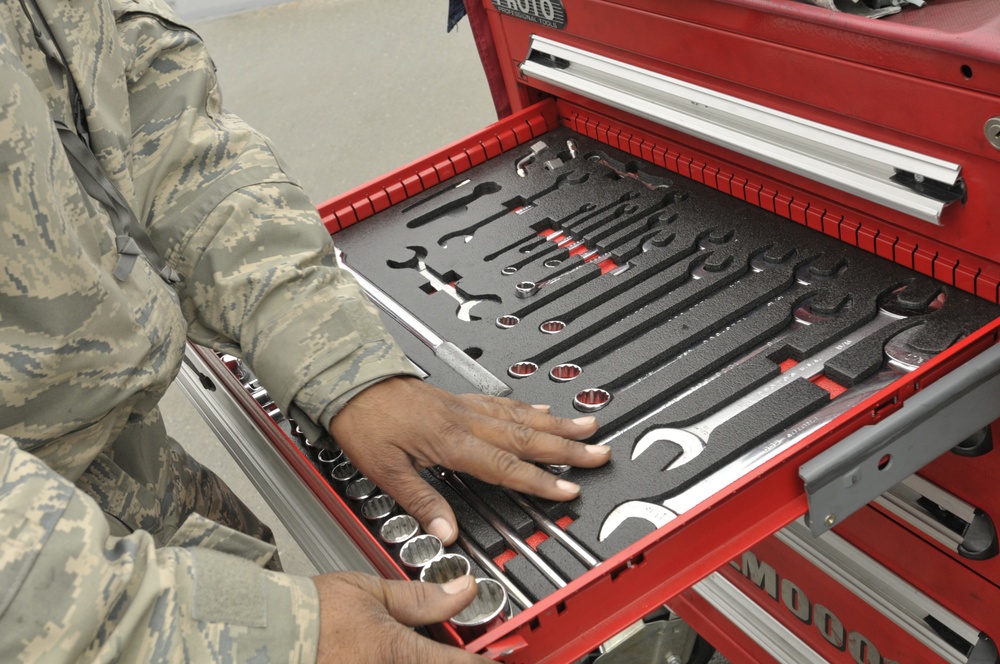
When I was an electronics technician in the Air Force, ‘tool accountability’ was huge. All toolboxes were arranged with individual foam cutouts for every individual tool, no matter how small, so it would be quickly and easily obvious from a mere glance if a tool was missing from the toolbox, leaving an empty cutout behind. (Like this.) Paperwork was required to check tools out of and into tool boxes. At the end of every job, the toolbox had to be checked – both the paperwork and visually – to ensure no tools were missing. (And if tools were missing, the job wasn’t done until those tools were found and accounted for.)
And that’s because aircraft in general – and jet engines in particular – really don’t like lost tools banging around loose inside. I didn’t even work on engines, or even on aircraft, but the Air Force had adopted these policies service-wide to prevent accidents resulting from lost tools left inside engines.
Which is why it baffles me that surgeons can sometimes accidentally leave a tool inside a patient. Working on a real human body is way more important than anything I worked on … and human bodies don’t like foreign objects left behind any more than jet engines do. Plus, those surgeons are getting paid so much more than I did, and they even have assistants in the room to handle the tools for them. How the fuck have they not managed to have a similar system of tool accountability, preventing them from leaving tools behind inside patients?
Surgeons are considered money makers in hospitals, literally “the talent.” If a surgeon punches a nurse, the nurse will be the one fired. If a surgeon sexually harasses a tech, even rapes a tech, the tech will be fired. If a surgeon makes life difficult for everyone in his department, they will work around him like a missing stair. If the surgeon comes in drunk or impaired, this “working around” gets tripled into direct coverup, where no one sees anything and no one knows anything. Reports are rote fabrications, as are incident reports; Joint Commission visits are scheduled in advance and prepared for (and their results kept non-public); when an incident occurs family members are routinely bullied; and god help you if you are an employee and you have a problem with any of this: whatever keeps the money coming.
Hospital HR departments are set up to maintain exactly this situation, to the point that even the internal complaint process is rigged, for example in a situation where per the employee handbook you as an employee must submit ALL your evidence up front, and no evidence added later will be considered. You might think, “Well, that’s harmless enough, right?” No. What this does is game any complaint from the start: you as an employee generally can’t sue successfully unless you have tried internal solutions first, and this way the hospital gets to see everything you have upfront, create a defense and/or coverup tailored to your proof, and then counter-accuse you with bullshit you cannot rebut because you never saw it coming and are not allowed to submit anything further. So you either have to sue, or accept being fired at some point, if you’re not fired outright with whatever fabricated misconduct you get charged with as a result of bringing the complaint. Or you can just drop it and try to get on with your career somewhere else.
I have more, but you get the idea. These true experiences come straight from a very large hospital in the southeast US, one that would be considered “award-winning” in a major combined metropolitan area and is considered a “great place to work” based on salary rates. But inside those walls, people who work there usually and very quietly go to the smaller hospital across town when they need their own surgical healthcare. There are many, many great people that work there who are every bit people you would want on your own healthcare team should you need it. But in many departments, the ones that demonstrably aren’t great are not the ones who get fired.
I’m sure other hospitals are better, but many are even worse. The very rare surgeon who does lose their job for cause anywhere in the US is out only because after a years-long road of internal complaints and related witness/complainant firings and employee harassment, one person, at great cost to their own career, doesn’t back down, OR by a stroke of circumstance a patient who is harmed has the right connections to make some kind of justice happen, and then the surgeon moves to another hospital in another state. But that’s rare.
And it’s all about the money: surgeons bring in lots of cash, like oncologists and cardiologists do, and elective surgeries bring in even more. Who pays for all that cushy hospital administration? Surgeons, specifically, among others. You’re 100% right that surgical mistakes can be eliminated, but not in a healthcare system that prioritizes profit over all else. If that surgeon has a pulse and can get to the hospital without getting arrested for DUI, guess who’s doing your surgery? Hospital HR departments protect “the talent,” simple as, and state licensing boards aren’t any guarantee either: they’re staffed with MDs who all went to the same schools as the people whose professional conduct they are entrusted with overseeing.
specifically elective surgeries is the money maker, like cosmetic or minor reasons, not a serious condition.
Gallbladders would like a word. Those things are made of gold.
But pee is stored in the balls
Solid post. #2 stings extra, extra hard when you learn that in the USA doctors spend on average somewhere between a quarter and half their time (studies vary) with insurance nonsense. We could potentially DOUBLE (or, low end, increase by 1/3 which is still insane) the number of useful doctor hours tomorrow, but we don’t. U$A
i assume you meant the residency program, yea that is such an abusive program that should be revised decades ago. i wonder if the medical admissions remain constant to med school or it declined. i know some people try different ways to get into the MD industry in AMERICA, EITHER AS foreigner/immigrant MD, or go to a questionable foreign medical school, apparently its tougher if you come from a foreign country as an MD.
on the third point the it was the anesthiesa professional group which made the push for the much more rigorous process that greatly improved outcomes. So there is some precedence for the profession realizing it needs to improve processes.
Yes, and it is important that those doctors advocated for better patient care and that the desire to develop procedures are somewhat there. However, the medical profession as a whole seems to be less focused on procedures than others.
If I recall, most medical mistakes take place over shift changes. Things like a patient getting a double dose of meds because they didn’t realize the prior shift already gave them. The idea is that minimizing the number of shift changes reduces the number of mistakes.
This is the explanation I’ve heard. It seems like someone should have thought of a better solution by now, though.
This! The long shift benefits the patients.
The number of hours worked per week is what should be reduced (without loss of pay).
This is accurate. It has to do with minimizing handoff risk.
https://pmc.ncbi.nlm.nih.gov/articles/PMC7539758/
Lots of uneducated responses in this thread that are pure conjecture and drivel.
The study only concludes that this manner of handing off is risky, nothing more. Going “our method of handing off is bad, so we will extend work hours and continue handing off in the same way” is piss-poor conclusion. Change the way things are handed off e.g let the physician tail the other physician for 1hour to 30 minutes into their shift, improve the data collection and data display methods to allow a clear patient status to be shown, etc.
Additionally, the study doesn’t compare handoff risk to work-length risk. You’re taking one single data point and drawing wide-ranging conclusions from it.
That study doesn’t really address the issue here though. That study demonstrated hand-off risks. But as far as I can read, it didn’t address shift length at all. All the providers in question had 8 hour shifts.
Obviously hand-offs produce certain risks. But that’s a trivial question. Obviously changing shifts will have some negative effect as providers must get up to speed. But the right question to ask isn’t “do hand-offs produce risks?” The right question to ask is, “if long shifts are used, do the reduced medical mistakes from the shift change counteract the increased medical mistakes from fatigue and unreasonable shift length?”
Do you have any studies that show this? Otherwise the benefits of long shifts are pure conjecture and drivel.
It’s a balance between minimizing handoffs and ensuring fatigue is managed appropriately.
https://www.nurseregistry.com/blog/12-hour-nursing-shifts-pros-and-cons/
https://www.hseblog.com/frms/#%3A~%3Atext=Healthcare+has+long%2Cthe+key+benefits
Yeah but those studies are about longer shifts (12 or 13 hours), not doubles or triples as OP asked. I don’t know how common it is for nurses to have 16-24 hour shifts, but it seems like that was the original question.
When I worked as a nurse in CA, the standard for shifts was 8 hours, we had 3 shifts in 24h. Some travel nurses took 12h shifts, but staff RN had 8s. Not saying we never made mistakes, but it can be done with proper staffing (4 patients to hand off instead of say, 7) and a culture that respects the handoff time. We did it at the bedside in most cases so the patient could hear what was going on. In CA there are strong unions advocating for patient safety, and as a result, minimizing exploitive working conditions. We were still exploited to be sure, but not like if you’d dropped that hospital in any other state without those protections. Pay was outstanding as well.
Strong unions are the answer to this problem, at least for nurses/support staff. Idk about docs and residency but that is a big part of why becoming a doc never seemed attainable to me.
do the travelling make more than the ones staffed in the hospitals, i heard they do in some areas.
It depends on several factors, the staffing company, specialty, etc. but yeah they probably make a little more, but there is the trade-off of longer shifts, health coverage (mine was 100% covered by the HMO I worked for), and workplace culture. But even staff nurses had opportunities for extra shifts or staying extra to make a little more money. My base pay was good enough the thought of staying one more minute over almost never appealed to me, though.
As a patient I really liked bedside handoff. Because I’m supposed to theoretically be in charge of my own care, right? Can’t do that unless you tell me what’s going on.
yeah our unit recently started a “quiet hours during handoff” policy. Patients kept coming up to the window to ask for drinks which is both a privacy thing and a more interruptions = more mistakes thing. Patients hate getting told to keep it moving but like. Trying not to kill you here bud.
I’ve never known a thirstier bunch of people until I was a nurse, and I used to wait tables. Like surely you’re not going through this much liquid at home.
I mean, in my experience a lot of those “mistakes” are kind nurses saying “fuck this idiotic Emergency Department Physicians Assistant. Someone go get the MD. This patient is in a shitton of pain why did they only prescribe a half a milligram of relief? I cannot find the patient’s face or butt or really tell the difference to tell how much pain they are in exactly though so I will just write down a 7. Whoopsie poopsie they just got the dose twice oh no look at them they are not screaming anymore we will call treatment a success” type mistakes.
But I have also had some very excellent nurses