With Social Security, the amount you get out is directly related to the amount you pay in. So if the cap is increased, yes, social security will get more income, but they’ll also need to start paying out a whole ton more.
It’s more of a forced savings/investment account than a wealth redistribution scheme. There is some redistribution happening, but not as much as most people think.
Social security benefits shouldn’t be proportional to income, it should be a set amount that everyone is eligible and it should be collected proportional to income including capital gains and everything else.
Social security paying retirement and disability payments is different from UBI. I am simply saying paying in should be proportional to income but the benefits should not.
A CEO and minimum wage worker should get the same social security benefits and they would be higher than they currently are if we taxed the Epstein class properly.
It’s a progressive payout though. SSA pays out 90 percent of average monthly income over 35 years (approximate based on their formula. AIME) below the first “bend” at about 1200 dollars per month, 32 percent between the first and second bend, and 15% above the second bend. So SSA would get 10.6 percent of every new dollar that used to be above the cap, while that dollar would increase the person’s benefit by their marginal rate (likely 32 or 15 for a high earner) divided by 420 months (you could assume the person will have a 35 year retirement to cancel out the two sides of the equation). Turning 10.6 percent into 15-32% (and most of the uncapped money would be likely to fall in the 15% if I had to guess) shouldn’t be a hard thing to do for SSA with extra funds to spare when you consider that the average retiree won’t live for a 35 year retirement and that there are 35 years of gains to capture between money in time vs money out time
except they mention paying a fraction of whats owed to some future pensioners. Why is it ok for them to pay in more than they get back but its somehow bad for someone of large means to pay in more they get back? Seems like a no brainer on how this should be handled to be equitable to society.


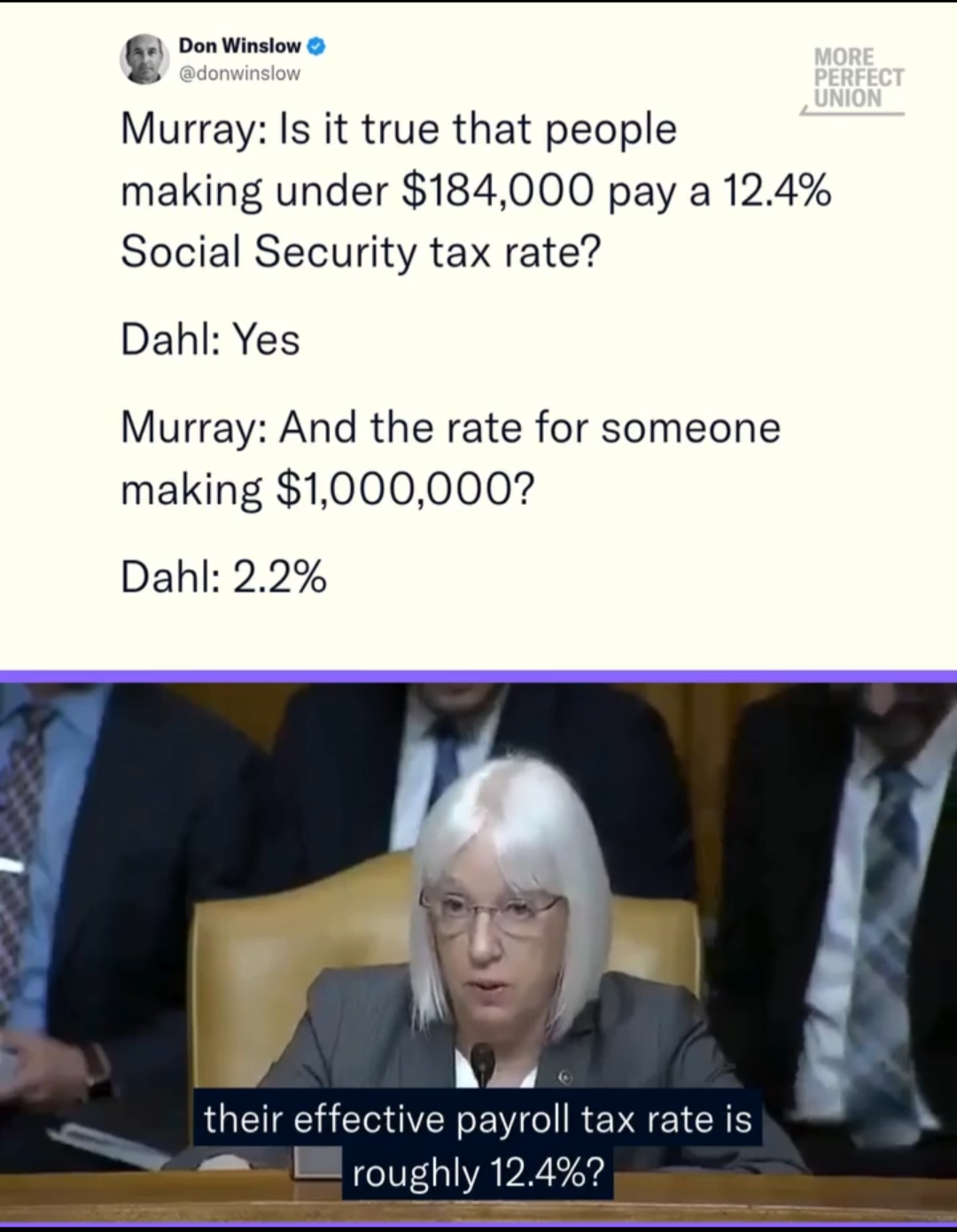
With Social Security, the amount you get out is directly related to the amount you pay in. So if the cap is increased, yes, social security will get more income, but they’ll also need to start paying out a whole ton more.
It’s more of a forced savings/investment account than a wealth redistribution scheme. There is some redistribution happening, but not as much as most people think.
Social security benefits shouldn’t be proportional to income, it should be a set amount that everyone is eligible and it should be collected proportional to income including capital gains and everything else.
That’s a UBI, not Social Security. It’s a great idea! But it’s not Social Security.
If that were UBI then I would get paid before I was 67.
Social security paying retirement and disability payments is different from UBI. I am simply saying paying in should be proportional to income but the benefits should not.
A CEO and minimum wage worker should get the same social security benefits and they would be higher than they currently are if we taxed the Epstein class properly.
It’s a progressive payout though. SSA pays out 90 percent of average monthly income over 35 years (approximate based on their formula. AIME) below the first “bend” at about 1200 dollars per month, 32 percent between the first and second bend, and 15% above the second bend. So SSA would get 10.6 percent of every new dollar that used to be above the cap, while that dollar would increase the person’s benefit by their marginal rate (likely 32 or 15 for a high earner) divided by 420 months (you could assume the person will have a 35 year retirement to cancel out the two sides of the equation). Turning 10.6 percent into 15-32% (and most of the uncapped money would be likely to fall in the 15% if I had to guess) shouldn’t be a hard thing to do for SSA with extra funds to spare when you consider that the average retiree won’t live for a 35 year retirement and that there are 35 years of gains to capture between money in time vs money out time
except they mention paying a fraction of whats owed to some future pensioners. Why is it ok for them to pay in more than they get back but its somehow bad for someone of large means to pay in more they get back? Seems like a no brainer on how this should be handled to be equitable to society.